


Motor vehicle theft has evolved from opportunistic smash-and-grabs into a sophisticated, technology-driven crisis affecting thousands of Australian families each year. Recent data from the Australian Bureau of Statistics reveals that approximately 0.7% of households experienced motor vehicle theft in 2023-24, with certain states—particularly Victoria—reporting alarming year-on-year increases exceeding 40% in some regions.[1]
The landscape of vehicle security has fundamentally changed. Traditional car alarms and steering wheel locks, once considered adequate deterrents, now face an adversary armed with radio frequency relay devices, diagnostic programming tools, and sophisticated tracking equipment. This comprehensive guide examines the current state of vehicle theft in Australia, explores how modern criminals operate, and provides evidence-based strategies to protect your investment—including the emerging role of GPS tracking technology that achieves recovery rates exceeding 90%.[2]
The Alarming State of Vehicle Theft in Australia
The statistics paint a sobering picture of Australia's vehicle theft epidemic. Guardian Assist Australia reports that over 72,000 vehicles were stolen across the nation in 2024, representing billions in insurance claims and contributing to premium increases exceeding 10% in the past year alone.[3] For Australian families, this translates not merely to financial loss but to profound disruptions in daily life—particularly for regional residents who depend on personal vehicles due to limited public transportation alternatives.
Victoria has emerged as the epicenter of this crisis. Victorian crime statistics document 23,248 thefts or attempted thefts of motor vehicles in the twelve months to June 2024—a staggering increase of 4,500 offences compared to the previous period. Attempted thefts spiked by 43% to 2,760 incidents, while items stolen from inside vehicles increased by 17.2% to 9,000 instances.[4] These figures represent a 10-year high for car thefts in Victoria, prompting urgent responses from law enforcement and insurance providers alike.
Regional Impact: Beyond the Statistics
While metropolitan areas dominate theft statistics by volume, regional Australians face disproportionate consequences when vehicles are stolen. The absence of public transportation infrastructure, rideshare services, and readily available rental vehicles transforms vehicle theft from an inconvenience into a crisis that affects employment, healthcare access, and family obligations. Insurance policies designed for urban contexts often fail to adequately address the extended vehicle hire needs of regional victims, leaving families stranded for weeks or months while awaiting vehicle recovery or replacement.
How Modern Thieves Are Stealing Cars: The Technology Arms Race
Contemporary vehicle theft bears little resemblance to the hot-wiring techniques of previous decades. Today's criminals leverage sophisticated electronic tools that exploit vulnerabilities in modern vehicle security systems, often completing thefts in under two minutes without triggering alarms or leaving visible damage.
Radio Frequency Relay Attacks: The Primary Threat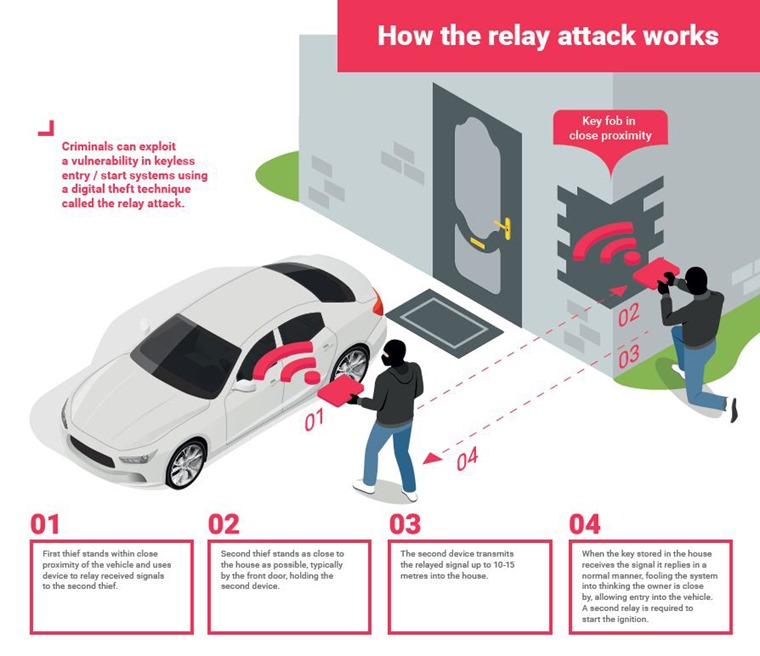
Radio frequency (RF) relay attacks have become the predominant method for stealing vehicles equipped with keyless entry and push-button ignition systems. This technique exploits the convenience features that manufacturers marketed as security enhancements. The attack operates through a simple but effective process: one criminal positions a relay device near the victim's home to capture the signal from key fobs stored inside, while an accomplice uses a second device near the vehicle to amplify and retransmit this signal. The vehicle's security system, detecting what appears to be the legitimate key fob in proximity, unlocks the doors and permits ignition.[5]
Bambi Gordon, Chief Executive of Neighbourhood Watch Victoria, notes that while RF relay technology was prevalent in the United Kingdom six to seven years ago, it has only recently proliferated across Victoria and Australia. The technology's accessibility—relay devices can be purchased online for as little as a few hundred dollars—has democratized sophisticated vehicle theft, placing powerful tools in the hands of opportunistic criminals and organized networks alike.[4]
Case Study: Drew Cameron, Albury, Victoria
Drew Cameron's experience illustrates the sophistication of modern vehicle theft. His BMW was stolen twice within days—both times while his keys remained secured inside his home and the vehicle was locked. On the first occasion, police recovered the vehicle nearby, but thieves had hijacked his BMW's driver profile, enabling them to track his movements throughout the day via the vehicle's connected services.
"They could see on the map where I was all through the day, so they just waited for me to come home and come back the next night, and got it again."
The thieves also deployed WiFi jamming equipment to disable Mr. Cameron's security cameras during both thefts. When his partner attempted to protect her vehicle by storing keys in a microwave (functioning as a Faraday cage), thieves stole that vehicle as well. Both vehicles were ultimately recovered destroyed—one in Albury, the other in Melbourne.[4]
Additional Theft Techniques
Beyond RF relay attacks, Australian law enforcement has documented several complementary theft methods:
Diagnostic Port Exploitation: Skilled offenders utilize OBD-II (On-Board Diagnostics) port access to program new keys or bypass immobilizer systems entirely. This technique requires greater technical knowledge but provides access to vehicles that may be resistant to relay attacks.
Number Plate Cloning: Criminals copy registration plates from vehicles matching the make, model, and color of stolen cars, enabling them to avoid detection by automated license plate recognition systems. Victims of plate cloning often face the secondary trauma of receiving fines or being implicated in crimes they did not commit.[6]
Organized Tracking Operations: Recent reports from Victoria document criminals placing tracking devices on targeted vehicles while owners shop or dine, then following the vehicles to residential addresses for later theft. This premeditation allows thieves to assess security measures and select optimal timing for theft attempts.[7]
GPS Tracking Technology: The 90% Solution
Amid escalating theft rates and increasingly sophisticated criminal techniques, GPS tracking technology has emerged as the most effective tool for vehicle recovery. Multiple industry sources, including the National Insurance Crime Bureau, report that vehicles equipped with GPS tracking devices achieve recovery rates exceeding 90%—a dramatic improvement over the significantly lower recovery rates for untracked vehicles.[2]
How GPS Trackers Work
Professional GPS tracking systems combine satellite positioning technology with cellular connectivity to provide real-time location monitoring. Unlike passive tracking methods, these devices continuously transmit vehicle location data via 3G, 4G, or 5G networks, enabling owners and law enforcement to monitor vehicle movements with updates occurring every few seconds to minutes. Advanced systems incorporate geofencing capabilities that trigger automatic alerts when vehicles enter or exit designated areas, as well as motion detection that notifies owners immediately when unexpected movement occurs.
Guardian Assist Australia's TR22 PRO GPS Tracker exemplifies professional-grade tracking technology, offering location updates every 10 seconds and integration with a 24/7 Grade A1 Security Control Room that coordinates directly with law enforcement for vehicle recovery operations.[3] This rapid response capability—enabled by real-time tracking—proves critical, as vehicles recovered within the first hours of theft typically sustain minimal damage and avoid entry into organized criminal networks that may export vehicles or dismantle them for parts.
GPS vs. Apple Find My: Understanding the Differences
The proliferation of Apple AirTags and similar Bluetooth tracking devices has prompted many vehicle owners to consider these budget-friendly alternatives to dedicated GPS trackers. While Apple's Find My network offers certain advantages for tracking personal items, understanding the fundamental technological differences proves essential for vehicle security applications.
| Feature | Professional GPS Tracker | Apple Find My (AirTag) |
|---|---|---|
| Tracking Method | GPS satellites + cellular network | Bluetooth + crowdsourced Apple devices |
| Coverage Range | Global (anywhere with cellular coverage) | Requires nearby Apple devices (200-300 ft Bluetooth range) |
| Real-Time Tracking | Yes (updates every few seconds) | No (sporadic updates, 10 min to hours delay) |
| Rural/Remote Performance | Excellent (cellular coverage dependent) | Poor (requires Apple device density) |
| Battery Life | Days to weeks (rechargeable) | ~1 year (replaceable battery) |
| Cost | $100-500+ device + $10-30/month subscription | $29-39 (no subscription) |
| Theft Alerts | Immediate motion/geofence alerts | No theft-specific alerts |
| Anti-Stalking Features | None (designed for owner tracking) | Alerts unknown AirTag travelers (72-hour delay) |
| Best Use Case | Vehicle theft prevention & recovery | Personal items (keys, wallets, bags) |
Forbes journalist Barry Collins conducted a week-long real-world test of an AirTag for vehicle tracking, documenting both capabilities and limitations. While the AirTag successfully located the parked vehicle every time during the test period—with accuracy sufficient to identify the specific section of a car park—Collins noted significant delays between location updates. These delays ranged from ten minutes to several hours depending on the density of nearby iPhone users, rendering the technology unsuitable for real-time tracking of moving vehicles.[8]
Collins concluded with a "qualified yes" regarding AirTags' utility for locating stolen vehicles, emphasizing their effectiveness in urban environments with high Apple device density while cautioning about limitations in rural areas and the inability to track vehicles in real-time during active theft situations. For vehicle owners seeking budget-conscious security, AirTags may serve as a supplementary layer in a comprehensive security strategy, but they cannot replace the immediate response capabilities of professional GPS tracking systems.
Hybrid Solution: SolNest Living's Smart GPS Car Tracker
Recognizing the complementary strengths of both technologies, hybrid tracking solutions have emerged that combine GPS positioning with Apple Find My network integration. The SolNest Living Smart GPS Car Tracker offers real-time GPS tracking capabilities while leveraging Apple's encrypted Find My network for additional location reporting. Priced at $24.95 AUD with no subscription fees, this approach provides enhanced coverage without the ongoing costs associated with traditional GPS tracking services.
Insurance Benefits: The Financial Case for GPS Tracking
Beyond the immediate security benefits, GPS tracking technology increasingly influences vehicle insurance premiums and claims processing. The insurance industry has recognized that vehicles equipped with tracking devices present substantially lower risk profiles, prompting early adopters in the Australian market to offer premium discounts for GPS-equipped vehicles.
Guardian Assist Australia notes that while GPS-linked insurance discounts remain in early adoption stages across Australia, global insurers have already established precedents for premium reductions ranging from 5% to 15% for vehicles with certified tracking systems.[3] The financial logic proves compelling: when stolen vehicles are recovered within minutes rather than days or weeks, insurance claims are either eliminated entirely or substantially reduced. For insurers operating in high-risk areas, GPS tracking can prevent dozens of claims annually, translating to hundreds of thousands of dollars in savings.
Claims Processing Advantages
Vehicle owners with GPS tracking systems also benefit from expedited insurance claims processing. The precise location data, movement history, and theft timeline documentation provided by tracking systems eliminate much of the investigative work traditionally required for theft claims. This documentation proves particularly valuable in cases involving plate cloning or disputed theft reports, where GPS data provides objective evidence of vehicle location and movement patterns.
Insurance providers may also have specific requirements regarding GPS tracker types, installation methods, and monitoring services that qualify for premium discounts. Vehicle owners should consult with their insurers before purchasing tracking systems to ensure compatibility with discount programs and claims procedures.
Comprehensive Vehicle Protection: A Layered Security Approach
Security experts universally recommend implementing multiple, complementary protection measures rather than relying on any single technology. This layered approach recognizes that determined criminals will attempt to defeat individual security systems, but the combination of multiple obstacles significantly increases theft difficulty and time requirements—often prompting thieves to abandon attempts in favor of easier targets.
Faraday Pouches for Key Fobs
Store keyless entry fobs in signal-blocking Faraday pouches or metal containers overnight to prevent relay attacks. This simple measure eliminates the primary vulnerability exploited by modern thieves.
Steering Wheel Locks
Visible mechanical deterrents like steering wheel locks signal to thieves that your vehicle requires additional time and effort to steal. Neighbourhood Watch Victoria emphasizes that visible locks often convince criminals to move to easier targets.
GPS Tracking Systems
Install professional GPS trackers with real-time monitoring and immediate theft alerts. The 90%+ recovery rate makes this the single most effective tool for vehicle recovery after theft occurs.
Secure Parking
Park in well-lit areas with surveillance coverage when possible. At home, use locked garages, gates, or bollards to create physical barriers. RACV data shows approximately 60% of vehicle break-ins involved unlocked cars.
Security Cameras
Install external CCTV covering driveways and parking areas. While sophisticated thieves may deploy WiFi jammers, cameras still deter opportunistic theft and provide evidence for police investigations.
Pre-Purchase Vehicle Checks
When buying used vehicles, verify VIN numbers, obtain comprehensive history reports, and be cautious of deals that seem too good to be true. This protects against unknowingly purchasing stolen or cloned vehicles.
Remove Valuables
Never leave spare keys, registration documents, or valuable items visible in vehicles. Thieves often break into cars opportunistically when they observe valuable items, and spare keys enable immediate theft.
Aftermarket Immobilizers
Consider professional installation of additional immobilizer systems that operate independently of factory security. These create additional barriers for thieves attempting diagnostic port exploitation.
What to Do If Your Vehicle Is Stolen
Despite preventive measures, vehicle theft may still occur. Rapid response in the first hours after theft significantly improves recovery prospects and minimizes damage. Follow these immediate steps:
Confirm the Theft: Before reporting to police, verify that your vehicle was not towed by local authorities or repossessed. Check with family members to ensure no one borrowed the vehicle without informing you.
Report to Police Immediately: Contact your local police station or emergency services to file a theft report. Provide your vehicle's VIN, registration details, and any distinguishing features. If you have GPS tracking data, share the current location with responding officers.
Notify Your Insurance Provider: Contact your insurer within the timeframe specified in your policy (typically 24 hours). Provide the police report number and any documentation from GPS tracking systems. Inquire about rental vehicle coverage while your claim is processed.
Alert Your Tracking Provider: If your vehicle has a professional GPS tracking system with monitoring services, contact the provider immediately. Many services coordinate directly with law enforcement for recovery operations.
Monitor for Plate Cloning: Even after vehicle recovery, remain vigilant for traffic fines or notices that may indicate your registration plates were cloned before recovery. Report any suspicious notices to police immediately.
The Future of Vehicle Security in Australia
The escalating sophistication of vehicle theft has prompted responses from multiple stakeholders in Australia's automotive ecosystem. Vehicle manufacturers are developing enhanced security features including encrypted key fob communications, motion-sensor-based key deactivation, and factory-integrated GPS tracking systems. Insurance providers are increasingly incorporating tracking technology into risk assessment models and premium structures. Law enforcement agencies, particularly Victoria Police's Vehicle Crime Squad, maintain ongoing liaison with manufacturers and insurers to identify emerging threats and coordinate responses.
However, the fundamental reality remains unchanged: vehicle security ultimately depends on owner vigilance and proactive implementation of protective measures. The technology arms race between security systems and theft techniques will continue to evolve, but the principles of layered security, rapid response, and recovery-focused tools like GPS tracking will remain central to effective vehicle protection.
Case Study: Eliza Bradley, Tallangatta, Victoria
Eliza Bradley's experience highlights the devastating impact of vehicle theft on regional Australians. After saving for years and waiting 18 months for delivery of her Toyota Prado, Ms. Bradley chased thieves reversing her vehicle down her driveway in darkness. Police confirmed the thieves used radio frequency relay devices, as her keys remained inside her home.
The theft's impact extended far beyond financial loss. Living in regional Victoria where public transportation is nonexistent, Ms. Bradley's family depends on weekly commutes exceeding 1,000 kilometers for work, school, and medical appointments. Her insurance company offered limited rental vehicle coverage inadequate for regional needs.
"I physically felt ill, panicking—what if I need to take my children to a hospital? How do I get my children to their commitments? Even just to get to the hire company is 60 kilometres away—I needed someone to take time off work to drive me the morning of the theft."
Her vehicle was eventually recovered from a NSW creek, but replacement will require another 18-month wait. Notably, her neighbors' vehicles operated by traditional keys were ransacked but not stolen—only button-start vehicles were taken.[4]
Protect Your Vehicle Today
Don't become another statistic in Australia's vehicle theft crisis. The SolNest Living Smart GPS Car Tracker combines professional GPS tracking with Apple Find My integration for comprehensive protection at an affordable price.
✓ Real-time location tracking
✓ Immediate theft alerts
✓ No subscription fees
✓ 30-day money-back guarantee
Conclusion: Taking Control of Vehicle Security
Australia's vehicle theft crisis demands informed, proactive responses from vehicle owners. The statistics are sobering—72,000 vehicles stolen in 2024, Victorian thefts at a 10-year high, and increasingly sophisticated criminal techniques that bypass traditional security measures. Yet the evidence also provides cause for optimism: GPS tracking technology achieves recovery rates exceeding 90%, layered security approaches effectively deter opportunistic theft, and emerging insurance incentives reward proactive protection measures.
The choice facing Australian vehicle owners is clear. You can hope that your vehicle will not become part of next year's theft statistics, or you can implement proven protective measures that dramatically reduce theft risk and maximize recovery prospects if theft occurs. For the cost of a single insurance excess payment—often less than a tank of fuel—GPS tracking technology provides ongoing protection and peace of mind that your vehicle investment remains secure.
The technology arms race between vehicle security and theft techniques will continue to evolve, but the fundamental principles remain constant: vigilance, layered protection, and rapid response capabilities provide the most effective defense against vehicle theft. As Drew Cameron's experience demonstrates, even the most advanced factory security systems can be defeated by determined criminals. However, the combination of Faraday pouches, visible deterrents, GPS tracking, and secure parking creates obstacles that prompt most thieves to seek easier targets.
For regional Australians like Eliza Bradley, vehicle security transcends property protection—it represents the ability to access employment, healthcare, education, and emergency services. The investment in comprehensive vehicle security measures proves modest compared to the profound disruptions that theft inflicts on families and communities.
Take action today. Assess your current vehicle security measures, identify vulnerabilities, and implement the layered protection approach recommended by law enforcement and security experts. Your vehicle represents a significant financial investment and an essential tool for daily life. Protect it accordingly.
References & Sources
- Australian Bureau of Statistics. (2024). Crime Victimisation, Australia, 2023-24. Retrieved from https://www.abs.gov.au
- National Insurance Crime Bureau. Stolen Vehicle Recovery Statistics. Referenced in: GPS ProTrack. (2024). "4 Effective Strategies to Recover Your Stolen Vehicle Using GPS Tracking." Retrieved from https://gps-protrack.com
- Guardian Assist Australia. (2025, July 5). Lower Insurance Risk with 90% Recovery GPS. Retrieved from https://guardianassist.com.au
- Somerville, E. (2024, November 27). "Car thieves using radio frequency relays to steal vehicles amid spike in thefts across Victoria." ABC News. Retrieved from https://www.abc.net.au
- ABC News. Reporting on keyless/relay thefts in Australia. Retrieved from https://www.abc.net.au
- 9News / A Current Affair. Plate cloning case studies and consumer warnings. Retrieved from https://9now.nine.com.au
- 9News. (2025, September 16). "Would-be car thieves turning to tracking devices to follow victims." A Current Affair. Retrieved from https://9now.nine.com.au
- Collins, B. (2021, May 15). "Apple AirTag: A Brilliant Car Tracker, As This Road Test Proves." Forbes. Retrieved from https://www.forbes.com